

What Is Sendcloud? Complete Guide to Shipping Automation for Online Stores 2026. Learn how Sendcloud works, its features, pricing, benefits, and how it helps e-commerce businesses automate shipping and scale faster.
Introduction
In this What Is Sendcloud? Complete Guide to Shipping Automation for Online Stores, we will explore one of the most powerful tools used by modern e-commerce businesses to simplify and automate shipping operations.
Running an online store is not just about making sales. One of the biggest challenges store owners face is shipping and order fulfillment. As orders grow, tasks like printing labels, comparing carrier prices, tracking packages, and handling returns can quickly become overwhelming and time-consuming.
Also see; Printify for Beginners: How It Works, Features & Honest Review
This is exactly where Sendcloud shipping automation comes in.
Sendcloud is designed to solve one of the biggest pain points in e-commerce — manual shipping management. Instead of switching between multiple courier websites or handling orders one by one, Sendcloud allows store owners to manage everything from a single dashboard.
With shipping automation tools like Sendcloud, businesses can:
- Automatically process orders
- Print shipping labels in bulk
- Compare shipping carriers and prices
- Track shipments in real time
- Manage returns more efficiently
For growing online stores, this can save hours of manual work every week and significantly reduce shipping errors.
“In e-commerce, speed and accuracy in shipping can directly impact customer satisfaction and repeat sales.”
This guide is designed for:
- Beginners starting an online store
- Shopify, WooCommerce, and Etsy sellers
- E-commerce entrepreneurs looking to scale
- Anyone curious about shipping automation software
We will break everything down in simple terms so you can clearly understand:
- What Sendcloud is
- How it works behind the scenes
- Whether it is worth using for your business in 2026
- And how it compares to other shipping solutions
By the end of this guide, you will know if Sendcloud is the right tool to help you automate and scale your online store operations efficiently.
What Is Sendcloud?
To understand this What Is Sendcloud? Complete Guide to Shipping Automation for Online Stores, we first need to clearly define what Sendcloud actually is and why it has become so popular in modern e-commerce.
Sendcloud is a shipping automation platform designed to help online stores manage their entire shipping process from one central system. Instead of manually handling orders, printing labels, and visiting multiple courier websites, Sendcloud connects everything together and automates most of the workflow.
Also see; QuickBooks Review 2026: Is It the Best Accounting Software for Small Business?
In simple terms:
Sendcloud helps online stores save time, reduce shipping errors, and scale faster by automating order fulfillment and delivery processes.
What Sendcloud Actually Does
Sendcloud is not a courier company. It does not deliver packages itself. Instead, it acts as a bridge between your online store and multiple shipping carriers such as DHL, UPS, FedEx, and local postal services.
It allows you to:
- Connect your online store (Shopify, WooCommerce, Etsy, etc.)
- Import orders automatically
- Choose the best shipping carrier
- Print shipping labels instantly
- Track all deliveries in one dashboard
Why Sendcloud Exists
Before tools like Sendcloud, e-commerce businesses had a big problem:
- Manually copying order details
- Logging into different carrier websites
- Comparing shipping prices one by one
- Printing labels individually
- Updating tracking numbers manually
This process was slow, expensive, and full of human errors.
Sendcloud was created to solve this by introducing shipping automation for online stores, allowing businesses to handle hundreds or even thousands of orders efficiently.
Who Uses Sendcloud?
Sendcloud is mainly used by e-commerce businesses that want to scale operations.
Common users include:
- Shopify store owners
- WooCommerce sellers
- Etsy entrepreneurs
- Dropshipping businesses
- Small to medium online retailers
Key Idea Behind Sendcloud
The main idea of Sendcloud is simple:
Automate shipping so businesses can focus more on selling and less on logistics.
Instead of treating shipping as a manual task, Sendcloud turns it into a fully automated system.
Quick Overview Table
| Feature | What It Does |
|---|---|
| Order Import | Automatically pulls orders from your store |
| Label Printing | Creates shipping labels in bulk |
| Carrier Integration | Connects multiple shipping companies |
| Tracking System | Real-time delivery tracking |
| Returns Handling | Simplifies product returns |
Why It Matters in 2026
In today’s e-commerce world, speed and automation are everything. Customers expect fast delivery, accurate tracking, and smooth returns. Without automation, businesses struggle to keep up.
That’s why tools like Sendcloud are becoming essential for growing online stores.
“Shipping is no longer just logistics — it is part of the customer experience.”
How Sendcloud Works
To fully understand this What Is Sendcloud? Complete Guide to Shipping Automation for Online Stores, it’s important to see how Sendcloud actually works behind the scenes. Even though it looks complex at first, the system is designed to be simple and beginner-friendly once set up.
At its core, Sendcloud connects your online store with multiple shipping carriers and automates the entire fulfillment process from order to delivery.
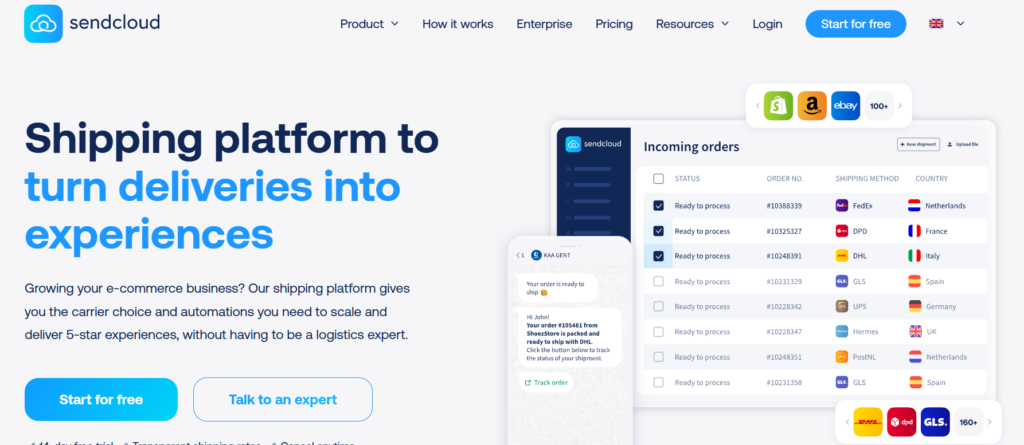
Step-by-Step Process of Sendcloud
Here is exactly how Sendcloud shipping automation works in real e-commerce operations:
1. Connect Your Online Store
You start by connecting your store to Sendcloud. It integrates with platforms like:
- Shopify
- WooCommerce
- Etsy
- Magento
- BigCommerce
Once connected, all orders automatically sync into Sendcloud’s dashboard.
2. Import Orders Automatically
Instead of manually copying order details, Sendcloud pulls all customer orders directly into the system.
This includes:
- Customer address
- Product details
- Order value
- Shipping preferences
This removes one of the most time-consuming tasks in e-commerce.
3. Choose Shipping Carriers
Sendcloud gives you access to multiple shipping providers such as DHL, UPS, FedEx, and local carriers.
You can:
- Compare shipping prices
- Select the fastest option
- Choose the cheapest delivery method
This helps reduce shipping costs and improve delivery speed.
4. Print Shipping Labels in Bulk
Instead of printing labels one by one, Sendcloud allows bulk label generation.
This means:
- Faster order processing
- Fewer manual errors
- Easier warehouse management
5. Automatic Tracking Updates
Once an order is shipped, Sendcloud automatically sends tracking updates to customers.
This improves customer experience by allowing them to:
- Track their order in real time
- Receive delivery updates
- Reduce support requests
Simple Workflow Table
| Step | What Happens |
|---|---|
| 1 | Store connects to Sendcloud |
| 2 | Orders are imported automatically |
| 3 | Shipping carrier is selected |
| 4 | Shipping label is created |
| 5 | Order is shipped |
| 6 | Tracking is updated automatically |
Why This Process Matters
Without automation, online stores spend hours every day handling shipping manually. Sendcloud removes this workload by centralizing everything in one dashboard.
This is especially powerful for:
- Growing Shopify stores
- High-volume Etsy sellers
- Dropshipping businesses
- Small e-commerce brands scaling fast
“Automation turns shipping from a daily task into a background process.”
Real Example (Case Insight)
Imagine an online clothing store receiving 100 orders per day.
Without Sendcloud:
- 100 manual label creations
- 100 tracking updates
- High risk of errors
With Sendcloud:
- All 100 orders processed in bulk
- Labels generated in minutes
- Tracking updated automatically
This difference can save several hours every single day.
Sendcloud Features Explained
In this section of the What Is Sendcloud? Complete Guide to Shipping Automation for Online Stores, we look at the key features that make Sendcloud a powerful tool for e-commerce shipping automation in 2026.
Shipping Label Automation
Sendcloud automatically generates shipping labels from your store orders, saving time and reducing manual errors. You can also print labels in bulk, which speeds up fulfillment for growing online stores.
Multi-Carrier Integration
Sendcloud connects with multiple shipping carriers like DHL, UPS, and local providers. This allows you to compare prices and choose the best shipping option for each order.
Order Management Dashboard
All your orders are organized in one dashboard. You can track, manage, and fulfill orders without switching between different systems.
Real-Time Tracking
Customers receive automatic tracking updates after their order is shipped, improving trust and reducing support requests.
Returns Management
Sendcloud simplifies returns by offering automated return labels and a self-service return system for customers.
Checkout Shipping Options
You can show shipping rates and delivery options directly at checkout, helping customers choose faster or cheaper delivery methods.
Feature Summary Table
| Feature | Benefit |
|---|---|
| Label Automation | Faster order processing |
| Multi-Carrier Support | Better shipping options |
| Order Dashboard | Easy management |
| Tracking System | Automatic updates |
| Returns System | Simplified returns |
| Checkout Options | Better customer experience |
Quick Insight: Sendcloud’s main strength is turning complex shipping tasks into a fully automated process.
Sendcloud Pricing
In this section of the What Is Sendcloud? Complete Guide to Shipping Automation for Online Stores, we’ll look at how Sendcloud pricing works and whether it is worth the cost for online store owners in 2026.
Sendcloud offers flexible pricing plans designed for small businesses, growing e-commerce stores, and high-volume sellers. The idea is simple: you only pay for the level of shipping automation and volume you need.
Free Plan
Sendcloud provides a free plan that is ideal for beginners or small online stores that are just getting started.
What it includes:
- Basic shipping label creation
- Limited carrier integrations
- Simple order management
- Basic tracking features
💡 Best for: small stores testing shipping automation for the first time.
Paid Plans
As your business grows, you can upgrade to paid plans that unlock more advanced features.
Typical paid features include:
- Bulk label printing
- Advanced carrier rates
- Branded tracking pages
- Returns automation
- Checkout shipping customization
💡 Best for: growing Shopify, WooCommerce, and Etsy stores.
Pricing Summary Table
| Plan | Best For | Key Features |
|---|---|---|
| Free | Beginners | Basic shipping tools |
| Paid Plans | Growing businesses | Automation, branding, returns |
| Advanced | High-volume stores | Full shipping optimization |
Is Sendcloud Worth the Price?
For most e-commerce businesses, Sendcloud is worth it because it reduces manual work and improves efficiency.
It is especially valuable if you:
- Process multiple orders daily
- Want to automate shipping tasks
- Sell on Shopify or WooCommerce
- Ship to multiple countries
However, smaller sellers with very low order volume may not fully use all features in paid plans.
“In e-commerce, time saved in shipping often equals money earned in scaling.”
Quick Insight
Sendcloud pricing is designed to scale with your business, meaning you can start small and upgrade as your order volume increases.
Benefits & Drawbacks of Sendcloud
In this section of the What Is Sendcloud? Complete Guide to Shipping Automation for Online Stores, we will look at the real advantages and disadvantages of using Sendcloud in 2026. This helps you understand whether it truly fits your online store before you commit.
Benefits of Sendcloud
Sendcloud is widely used in e-commerce because it solves one of the biggest challenges in online business — shipping management. Its benefits mainly come from automation, efficiency, and scalability.
Time-Saving Automation
Sendcloud removes the need for manual shipping tasks like entering order details, printing labels one by one, or updating tracking numbers. Everything is automated inside one system.
Lower Shipping Costs
By comparing multiple carriers, businesses can choose the cheapest or fastest delivery option for each order, helping reduce overall shipping expenses.
Improved Customer Experience
Customers receive automatic tracking updates, branded notifications, and faster processing times, which increases trust and satisfaction.
Scalable for Growth
Whether you process 10 orders or 1,000 orders per day, Sendcloud can handle scaling without adding extra manual work.
Centralized Order Management
All orders from different platforms (Shopify, WooCommerce, Etsy) are managed in one dashboard, making operations much simpler.
Drawbacks of Sendcloud
Even though Sendcloud is powerful, it is not perfect. There are a few limitations that beginners should understand before using it.
Learning Curve for Beginners
New users may need time to understand shipping rules, carrier setups, and automation settings.
Pricing Can Increase with Growth
While the platform starts affordable, advanced features and higher order volumes can increase costs.
Carrier Limitations in Some Regions
Not all shipping carriers are available in every country, which may limit flexibility for some users.
Dependence on External Carriers
Sendcloud does not handle shipping itself — it relies on third-party carriers, so delivery performance still depends on them.
Pros vs Cons Summary Table
| Pros | Cons |
|---|---|
| Saves time through automation | Learning curve for beginners |
| Reduces shipping costs | Higher plans can be expensive |
| Improves customer experience | Carrier availability varies |
| Centralized order management | Depends on external couriers |
| Scales easily | Setup takes time initially |
“Sendcloud doesn’t eliminate shipping — it makes shipping smarter, faster, and more organized.”
Is Sendcloud Good for Online Stores?
In this section of the What Is Sendcloud? Complete Guide to Shipping Automation for Online Stores, we’ll answer one of the most important questions: is Sendcloud actually a good choice for online businesses in 2026?
The short answer is yes — but it depends on the size and needs of your store.
Sendcloud is built specifically for e-commerce businesses that want to automate shipping, reduce manual work, and scale operations efficiently. It is not just a tool for sending parcels — it is a full shipping management system.

Who Should Use Sendcloud?
Sendcloud works best for online stores that already have or are planning to grow their order volume.
It is ideal for:
- Shopify store owners
- WooCommerce sellers
- Etsy entrepreneurs
- Dropshipping businesses
- Small and medium e-commerce brands
These businesses benefit the most because they deal with multiple orders daily and need automation to stay efficient.
Who Should Avoid Sendcloud?
While Sendcloud is powerful, it may not be necessary for everyone.
It may NOT be ideal for:
- Very small stores with few orders per month
- Beginners who are only testing products
- Businesses that do not ship frequently
- Users who prefer manual control over shipping
If your store is still in the early testing phase, you may not need full shipping automation yet.
Best Use Cases for Sendcloud
Sendcloud performs best in real-world e-commerce situations where speed and efficiency matter.
Example Use Cases:
- A Shopify fashion store processing 100+ orders daily
- An Etsy seller shipping internationally
- A WooCommerce store handling multiple carriers
- A dropshipping business scaling fast
Key Insight
Sendcloud becomes more valuable as your business grows. The more orders you handle, the more time and money you save through automation.
“Shipping automation is not about convenience — it is about scaling without stress.”
Quick Verdict Table
| Business Type | Is Sendcloud Good? |
|---|---|
| Small beginner store | ⚠️ Not necessary yet |
| Growing e-commerce store | ✅ Very useful |
| High-volume store | ✅ Essential tool |
| Dropshipping business | ✅ Highly recommended |
Sendcloud vs Competitors
In this section of the What Is Sendcloud? Complete Guide to Shipping Automation for Online Stores, we compare Sendcloud with other popular shipping automation tools. This helps you understand where it stands in the e-commerce shipping software market in 2026.
Choosing the right platform is important because it affects your shipping speed, costs, and customer experience.
Sendcloud vs ShipStation
ShipStation is one of the most well-known competitors in shipping automation.
| Feature | Sendcloud | ShipStation |
|---|---|---|
| Ease of Use | Very beginner-friendly | Slightly more complex |
| Carrier Options | Strong in Europe | Strong in US |
| Automation | High | High |
| Setup | Simple | Moderate |
Key Insight:
Sendcloud is often easier for beginners, especially in Europe, while ShipStation is widely used in the US market.
Sendcloud vs Easyship
Easyship focuses heavily on global shipping and cross-border e-commerce.
| Feature | Sendcloud | Easyship |
|---|---|---|
| International Shipping | Good | Excellent |
| Pricing Tools | Strong | Very strong |
| Carrier Network | Regional + global | More global-focused |
| Ease of Use | Simple | Slightly advanced |
Key Insight:
Easyship is stronger for global selling, while Sendcloud is simpler for day-to-day store management.
Sendcloud vs Manual Shipping
Many beginners still manage shipping manually without any software.
| Factor | Sendcloud | Manual Shipping |
|---|---|---|
| Time Required | Low | Very high |
| Errors | Low | High risk |
| Scalability | High | Limited |
| Automation | Full | None |
Key Insight:
Manual shipping may work for tiny stores, but it becomes inefficient as soon as order volume increases.
Which Is Best for Beginners?
- Sendcloud → Best for simple automation and easy setup
- ShipStation → Best for advanced users in US markets
- Easyship → Best for international shipping businesses
Final Comparison Insight
Sendcloud stands out because it focuses on simplicity and automation, making it ideal for small to medium e-commerce businesses that want to grow without dealing with complex logistics systems.
“The best shipping tool is not the most advanced — it is the one that saves you the most time every day.”
How to Set Up Sendcloud (Step-by-Step Guide)
In this section of the What Is Sendcloud? Complete Guide to Shipping Automation for Online Stores, we’ll go through a simple step-by-step setup process so you can start using Sendcloud for your online store in 2026.
Even if you are a beginner, the setup is designed to be straightforward once you understand the flow.
Step 1: Create Your Sendcloud Account
The first step is to sign up for a Sendcloud account. You can start with a free plan, which allows you to explore the platform before upgrading later.
After signing up, you will access the main dashboard where all shipping tools are located.
Step 2: Connect Your Online Store
Next, you connect your e-commerce platform to Sendcloud. This is where the automation begins.
Supported platforms include:
- Shopify
- WooCommerce
- Etsy
- Magento
- BigCommerce
Once connected, your orders will automatically sync into Sendcloud without manual entry.
Step 3: Add Shipping Carriers
After connecting your store, you choose and connect shipping carriers. Sendcloud supports multiple carriers depending on your region.
This allows you to:
- Compare shipping rates
- Select delivery speed options
- Use multiple carriers for flexibility
Step 4: Configure Shipping Rules
This is where you set automation rules for your store.
You can define:
- Shipping methods based on order value
- Domestic vs international shipping rules
- Preferred carriers for specific regions
- Default packaging options
These rules help reduce manual decision-making.
Step 5: Print Labels and Process Orders
Once everything is set up, orders will start flowing into Sendcloud automatically.
From here, you can:
- Print shipping labels in bulk
- Process multiple orders at once
- Track all shipments in one dashboard
Step 6: Activate Tracking & Notifications
Sendcloud automatically sends tracking updates to your customers after shipping. This improves transparency and reduces support requests.
Customers can:
- Track their orders in real time
- Receive automatic delivery updates
- Stay informed without contacting support
Setup Summary Table
| Step | Action |
|---|---|
| 1 | Create account |
| 2 | Connect store |
| 3 | Add carriers |
| 4 | Set shipping rules |
| 5 | Process orders |
| 6 | Enable tracking |
Key Insight
The real power of Sendcloud starts after setup. Once configured properly, most shipping tasks become fully automated.
“A good setup today can save hundreds of hours in future order management.”
Tips for Using Sendcloud Effectively
In this section of the What Is Sendcloud? Complete Guide to Shipping Automation for Online Stores, we’ll cover practical tips that help you get the most value out of Sendcloud after setup. Many beginners install the tool but don’t fully optimize it — and that’s where they miss out on time and cost savings.
Optimize Your Shipping Costs
One of the biggest advantages of Sendcloud is carrier comparison. To maximize savings, always compare shipping options before setting default rules.
Best practices:
- Use the cheapest reliable carrier for standard orders
- Reserve faster shipping for premium customers
- Test different carriers to find the best balance of cost and speed
💡 Small changes in carrier selection can significantly improve profit margins over time.
Use Automation Rules Wisely
Sendcloud allows you to automate shipping decisions, which reduces manual work.
You should:
- Set rules based on order value or weight
- Automatically assign carriers for specific regions
- Create default shipping methods for common orders
This helps reduce errors and speeds up fulfillment.
Improve Delivery Speed Experience
Fast delivery improves customer satisfaction and increases repeat purchases.
To improve delivery:
- Choose warehouses or carriers closer to your customers
- Use express shipping for high-value products
- Monitor carrier performance regularly
Manage Returns Professionally
Returns are part of every e-commerce business. Instead of handling them manually, use Sendcloud’s returns system properly.
Tips:
- Offer self-service return portals
- Automate return label generation
- Track return status in one place
This reduces customer support workload.
Improve Customer Communication
Clear communication builds trust in your store.
With Sendcloud, you can:
- Send automatic tracking updates
- Customize shipping notifications
- Keep customers informed at every stage
Pro Tips Summary Table
| Area | Best Practice |
|---|---|
| Cost | Compare carriers regularly |
| Automation | Use rules for order handling |
| Delivery | Optimize shipping speed options |
| Returns | Automate return process |
| Communication | Enable tracking notifications |
“Efficient shipping is not just logistics — it is a key part of customer satisfaction.”
Final Insight
Sendcloud becomes much more powerful when used strategically. Businesses that optimize carriers, automation rules, and returns management see the biggest improvements in efficiency and customer experience.
Final Verdict: Is Sendcloud Worth It?
In this final section of the What Is Sendcloud? Complete Guide to Shipping Automation for Online Stores, we’ll give a clear and honest conclusion based on everything covered so far.
Sendcloud is not just a shipping tool — it is a full automation system for e-commerce logistics. Its main purpose is to reduce manual work, speed up fulfillment, and help online stores scale without operational stress.
Overall Value of Sendcloud
Sendcloud delivers the most value when your store starts growing and order volume increases. It turns a complex shipping process into a simple automated workflow.
Key strengths include:
- Strong shipping automation
- Easy order management
- Multi-carrier integration
- Improved customer tracking experience
- Scalable for growing businesses
When Sendcloud Is Worth It
Sendcloud is highly recommended if you:
- Run a Shopify, WooCommerce, or Etsy store
- Process daily or weekly orders consistently
- Want to reduce manual shipping work
- Need multi-carrier shipping options
- Are planning to scale your e-commerce business
In these cases, Sendcloud can save hours of work every week and improve overall business efficiency.
When Sendcloud May Not Be Necessary
Sendcloud may NOT be ideal if:
- You are just starting and have very few orders
- You prefer fully manual control over shipping
- Your store is still in the testing phase
- You do not ship products regularly
For very small stores, the full automation features may not be fully utilized yet.
Final Pros vs Cons Summary
| Pros | Cons |
|---|---|
| Saves time through automation | Learning curve for beginners |
| Reduces shipping errors | Pricing may increase with scale |
| Improves customer experience | Depends on carrier availability |
| Centralized order system | Setup required initially |
Final Recommendation
“Sendcloud is best understood as a growth tool — not just a shipping tool.”
If you are serious about building a scalable online store, Sendcloud is one of the strongest shipping automation platforms available in 2026.
It allows you to shift focus from manual logistics to what really matters:
- Marketing
- Sales
- Customer experience
- Business growth
Final Verdict
✔ Sendcloud is worth it for growing e-commerce businesses that want automation, efficiency, and scalability.
❌ It may not be necessary for very small or beginner-stage stores.